
How System-First Outsourcing Helps Entrepreneurs Scale Without Burnout
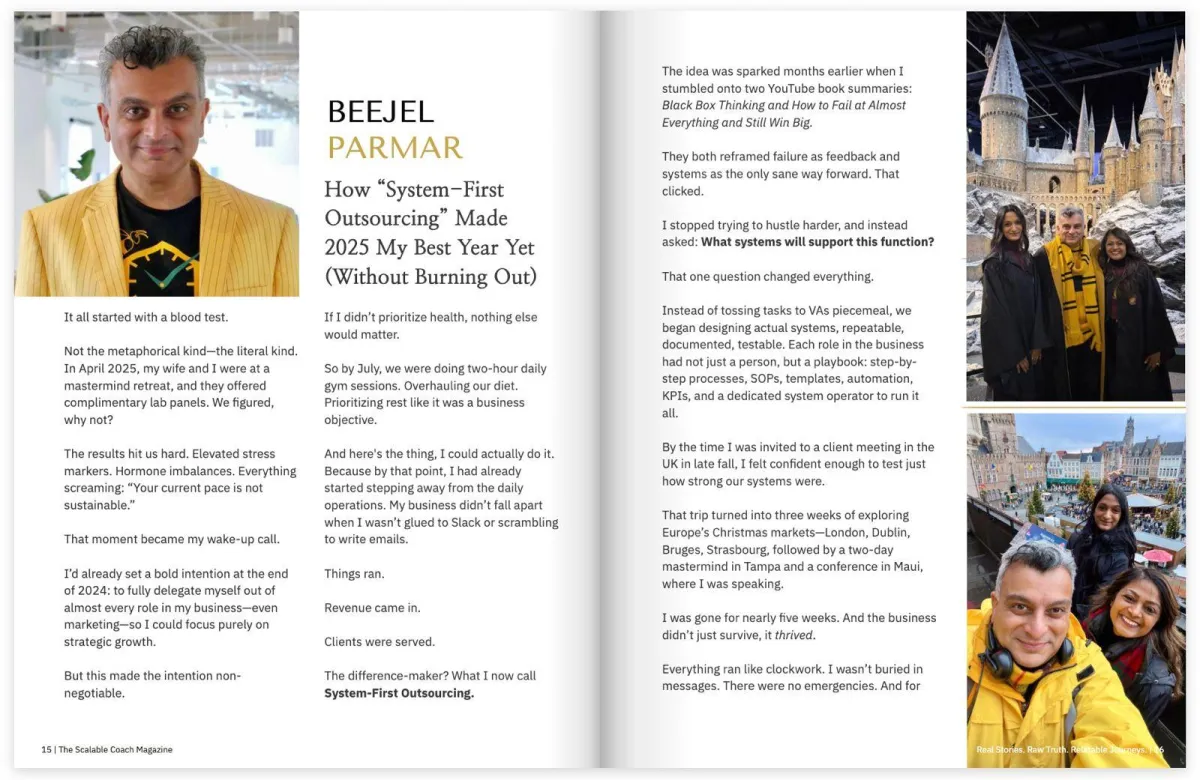
It started with a blood test.
Not a metaphor. A real one. Elevated stress markers. Hormone levels that were off. A doctor looking across a desk saying, "Your current pace is not sustainable."
Sound familiar?
A lot of entrepreneurs hit this wall. The business grows, the to-do list grows faster, and somewhere between answering emails at midnight and skipping lunch for the third day in a row, the whole point of building something gets lost.
The instinct is to work harder. Push through. Add another tool. Hire one more person and hope for the best.
That instinct is wrong.
The real fix isn't more effort. It's better systems — and the right virtual assistant services built around those systems.
Why Hiring a VA Without a System Usually Fails
Most entrepreneurs don't have a delegation problem. They have a systems problem.
Here's what that looks like in practice:
You hire a virtual assistant, but spend more time explaining tasks than it would take to do them yourself
The VA does the work differently every time because there's no documented process
You feel like you can't truly step away because "they need you" for every decision
After a few weeks, you quietly take the tasks back
This isn't the VA's fault. It's a setup problem.
Tossing tasks to someone without giving them a playbook is like handing someone the wheel without telling them where you're going. It creates dependency, not freedom.
What System-First Outsourcing Actually Looks Like
The shift happens when you stop thinking about outsourcing as offloading tasks and start thinking about it as building a machine.
System-first outsourcing means every role — including your remote executive assistant — comes with:
A clear scope of work — not just "help with emails" but a documented process for how emails are triaged, responded to, and tracked
SOPs (Standard Operating Procedures) — step-by-step instructions so the work gets done right without you being in the room
KPIs — so you can actually measure whether the system is working
Automation where it fits — tools that handle the repetitive triggers so your assistant focuses on judgment calls, not busywork
When this is done right, things just run. Revenue comes in. Clients get served. And you're not the bottleneck anymore.
The Role of a Remote Executive Assistant in Scaling
A well-supported executive assistant isn't just someone who manages your calendar. When they're plugged into real systems, they become an operations hub.
Here's what a skilled remote executive assistant can own once the system is in place:
Inbox and communication management — filtering, drafting, responding with pre-approved templates
Client onboarding coordination — making sure every new client gets the same smooth, professional experience
Meeting prep and follow-up — agendas, notes, action items tracked and assigned
Vendor and contractor communication — keeping projects moving without pulling you in
Reporting — weekly dashboards so you know what's happening without asking
That's not task-dumping. That's a real operator running a real function of your business.
How to Get Started With Virtual Assistant Services the Right Way
If you're ready to stop being the most important person in your own business (in a good way), here's the honest sequence:
Audit your time first — Track what you actually do for one week. You'll be shocked at how much is delegatable.
Document before you delegate — Write down the process before you hand it off. Even a rough SOP is better than none.
Start with one role, not five — Nail one function with a remote executive assistant before expanding.
Measure the output, not the hours — Systems are judged by results, not by how busy someone looks.
Iterate — The first version of a system is never the best version. Build, test, improve.
The Business Doesn't Fall Apart When You Step Back — It Thrives
One of the clearest proofs that system-first outsourcing works? When the owner travels for weeks and comes back to find everything still running.
Not just surviving. Actually thriving.
No emergencies. No backlog. Clients were served. Revenue came in. The team handled it.
That kind of confidence doesn't come from hiring more people. It comes from building repeatable, documented, testable systems — and then placing the right virtual assistant outsourcing team inside those systems to run them.

About usullet List 1
Servicesllet List 2
Free ROI Guidelet List 3
Case StudiesBullet List 4
Blogsull
Careerset List 5


